A battery gigafactory can rise in three years and look like industrial destiny. A mine that feeds it can take 16.5 years to move from discovery to first output, and often longer if politics, water, roads, permits or local opposition get in the way. That gap is the whole story. We have spent a decade talking as if the energy transition is being held back by chemistry, when the real choke point is far more old fashioned: digging up the stuff in the first place, then refining it into something a battery plant can actually use.
I think this is where a lot of the public conversation goes wrong. Battery factories are visible, shiny and easy to announce. Mines are slow, dirty, expensive and politically awkward. Capital floods downstream, where the press release is easier, while the upstream chain, where the actual scarcity lives, limps along behind it.
What happened
Lithium, cobalt, nickel and graphite sit at the centre of the battery boom, but they do not come from some generic global pool. Australia produces the biggest share of lithium, about 47% in 2022, mostly from hard rock mines. Chile followed with roughly 29%. The cobalt story is even more concentrated, with the Democratic Republic of Congo supplying more than 70% of global output in 2022, usually as a byproduct of copper and nickel mining. Indonesia has muscled into the nickel trade and now accounts for over half of global production, while China dominates natural graphite with about 65% of supply.
Those are extraction figures. The more important map is the one behind them. China refines around 60% of the world’s lithium, 70% of cobalt, 70% of nickel and more than 90% of natural graphite into battery-grade material. That is the real power position. Ore is only the start. The material only becomes useful when it has been cracked, purified, shaped and converted into the right chemical form for cathodes and anodes. A country can sit on the rock and still lose the game if somebody else owns the refinery.
Battery politics is not really about where the mine is. It is about who controls the midstream. The mine sells a chunk of geology. The refiner sells battery-grade chemicals. One is dirt with a balance sheet; the other is leverage.
Why it was done
The manufacturing side has surged ahead for a very obvious reason: governments reward it. The United States used the 2022 Inflation Reduction Act to pull battery and EV investment onshore. Europe has done something similar with its industrial policy. Carmakers want cell supply locked in before they miss their electric vehicle targets. Investors like gigafactories because they can go from announcement to production in 2 to 5 years, which is quick enough to fit a quarterly spreadsheet and slow enough to keep everyone feeling serious.
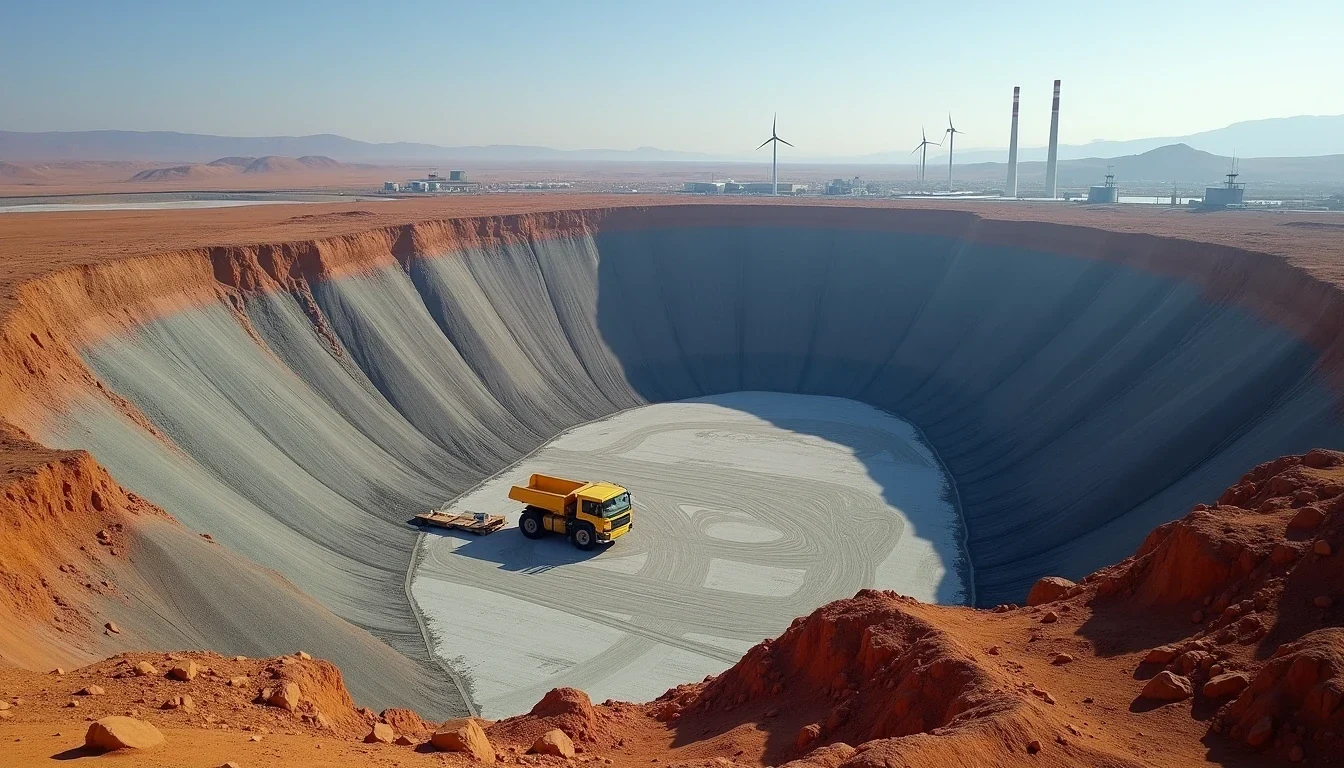
Mining does not cooperate with that rhythm. The average lead time from discovery to production is 16.5 years, according to the International Energy Agency’s 2022 critical minerals report. That is not a planning cycle, it is a generational inconvenience. By the time a mine opens, the people who approved it may have changed jobs twice and the market it was meant to serve may have moved on.
So the industry talks itself into a comforting fiction: announce the factory first, trust the upstream later. Paper capacity looks impressive. Real capacity is what matters, and real capacity depends on feedstock that has been dug up, shipped, refined and contracted. A battery plant without material is a cathedral with no congregation.
What constrains it
The bottleneck starts at geology and then becomes politics. New mines need exploration, resource definition, environmental approvals, financing, community consent, transport links, power, water and often a port upgrade or a new road. In remote places, the mine is only the beginning. Everything around it has to be built too.
The usual conversation about battery chemistry is so oddly beside the point. You can improve cell design, cut cobalt use, squeeze more energy out of nickel, and expand sodium-ion or iron phosphate where it fits. These are useful steps. But none of that changes the fact that the battery industry still needs huge volumes of mined and refined material. Chemistry can reduce pressure at the margin. It does not abolish the supply chain.
Refining is where the strategic squeeze gets nastier. China’s grip on processing means it can shape what reaches the market, when it reaches it and at what price. That matters because refined battery material is where the value sits. A refinery can sit far from the mine, take in ore from multiple countries and quietly become the gatekeeper for the whole chain. It is a more elegant form of power than owning a pit. Less romantic, more effective.
The price history tells the same story. Lithium carbonate prices rose by more than 1,000% between early 2021 and late 2022. That kind of spike does not come from a minor market wobble. It comes from a system that has built far more manufacturing appetite than upstream supply. When that happens, the scarcity tax lands on EVs, grid batteries and every utility trying to store solar for the evening peak.
What it means next
The uncomfortable part is that the energy transition now depends on a mining cycle that still moves at the speed of the last century. If battery demand keeps rising faster than mines and refineries come online, the result will not be a dramatic failure. It will be a drag. EVs get pricier. Grid storage gets delayed. Countries with money get first access. Countries without it wait. That is how inequality hides inside decarbonisation.
Africa enters the story as more than a footnote. The DRC sits on the world’s cobalt muscle. Mozambique is one of the important graphite producers. South Africa has industrial memory, ports and grid headaches of its own, which means the region is not watching from the sidelines. It is in the game whether it likes it or not.
The IEA has already warned that current mineral supply plans are not enough for a net zero path to 2050. I read that as a structural warning, not a temporary one. We are not short of battery factories. We are short of the boring, brutal, geopolitical work of mining and refining at scale. Until that changes, every new gigafactory announcement will keep carrying a small lie inside it.