A factory in Rotterdam can have the land, the permits, the financing, and buyers lined up across three continents. None of it counts if TenneT cannot name a year when the electrons will arrive. This is the new arithmetic of the energy transition in the Netherlands, where grid congestion has turned a working power socket into the scarcest strategic asset in European industry.
The Queue for Growth
The Dutch grid operators are now in the business of saying no. Alliander and Stedin, the regional distribution operators, have put housing developments on hold because new residential areas cannot be energised. The numbers run to tens of thousands of homes stalled nationwide by 2023. In Westland, the greenhouse capital of Europe, horticulturalists who want to electrify heating and lighting are told to wait. The Port of Rotterdam, the continent’s largest industrial harbour, has seen electrification projects rejected or deferred because the high-voltage network has no headroom.
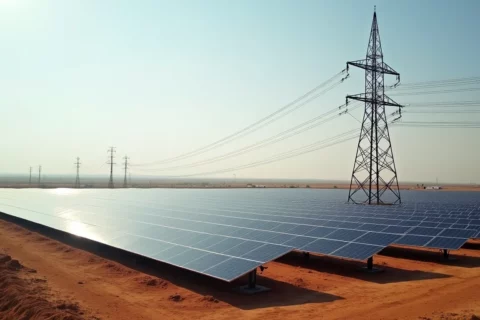
The renewable energy projects meant to relieve this pressure are themselves trapped in the same queue. Solar parks, wind farms, and battery storage facilities sit with generation capacity but no route to market. Developers face a brutal choice: absorb years of carrying costs for idle equipment, or abandon the project. The system’s inability to absorb new infrastructure throttles the very infrastructure intended to decarbonise it.
Data centres present the starkest demand shock. They consumed roughly 5% of Dutch national electricity in the early 2020s. By 2030, that share is projected to triple to 15%. Each facility is a concentrated load the size of a small city, arriving on a timeline measured in months rather than the decade-long cycles for which grids were designed. The Netherlands has built itself into a digital hub on the assumption that power would follow. Power is not following.
Why Twelve Years Is the New Normal
Grid upgrades that might once have taken three years now stretch to twelve. The bottleneck is not any single failure but a system designed for gradual, predictable change now facing exponential, unpredictable demand.
Permitting alone consumes years. Environmental impact assessments, spatial planning procedures, and public consultation create multiple veto points. Local opposition to new substations or overhead lines triggers legal challenges that reset timelines. The Dutch government acknowledged in 2022 that this regulatory architecture, built for stability, has become an active impediment to infrastructure build-out.
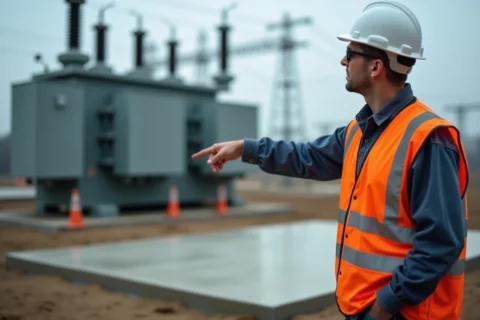
Behind the paperwork sits a physical scarcity. High-voltage transformers, specialised switchgear, and submarine cable for offshore wind connections face global lead times that have stretched from months to years. The same supply chain pressures hitting semiconductor and battery manufacturing are now constraining the equipment that makes grids possible.
The human bottleneck is another factor. TenneT, Alliander, Enexis, and Stedin have all reported in their 2023 filings that qualified engineers, project managers, and installation technicians are simply not available in sufficient numbers. Training programmes cannot scale fast enough. Experienced staff are poached between operators. The grid expansion competes for talent with offshore wind construction, battery manufacturing, and every other electrification project across Northern Europe.
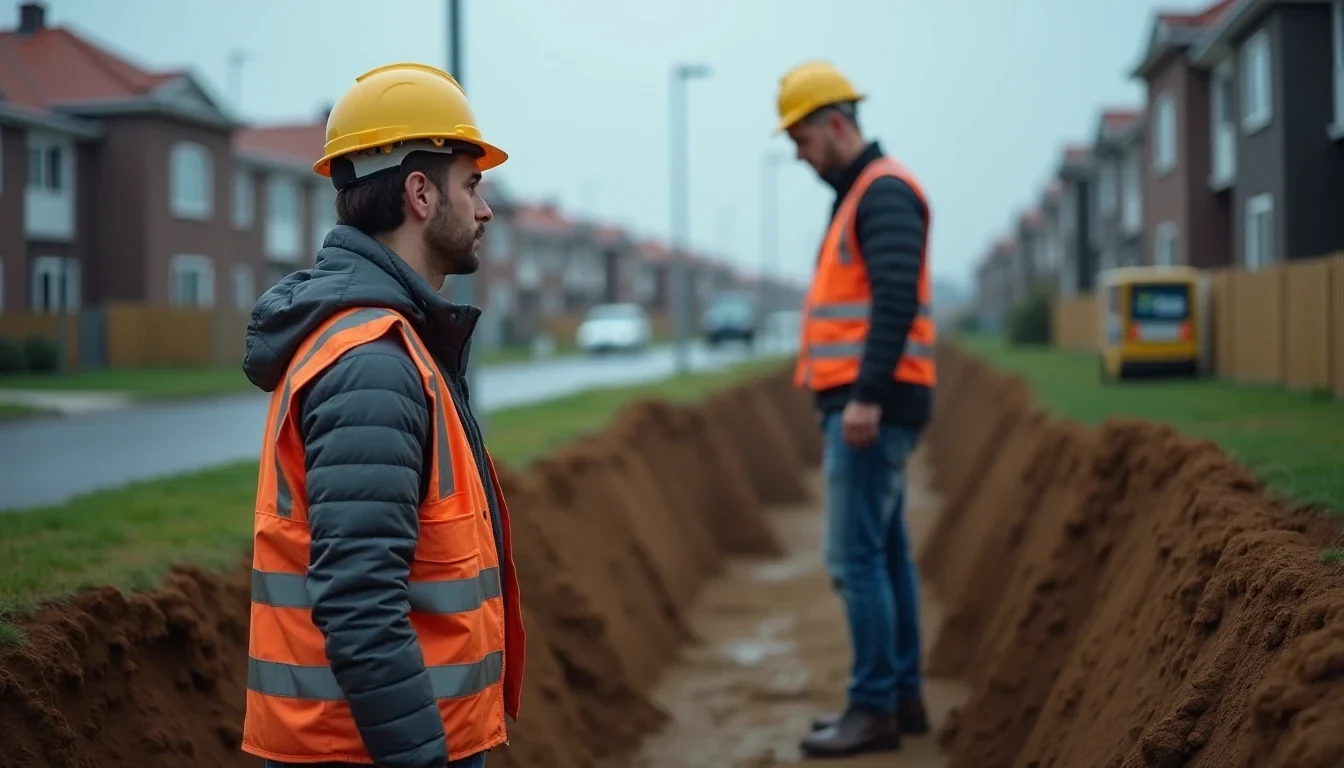
Land acquisition in one of the world’s most densely populated countries adds further friction. Every cable route crosses farmland, nature reserves, or existing development. Compulsory purchase procedures move at the speed of Dutch property law, which is not the speed of Dutch industrial ambition.
The New Location Factor
For most of the post-war period, companies chose where to expand based on a familiar hierarchy: labour quality, tax treatment, transport links, regulatory stability. Electricity was a utility, assumed to be available at standardised cost wherever industry clustered. That assumption is now dead in the Netherlands.
A credible connection date has become a negotiable variable as valuable as any tax holiday. Foreign direct investment decisions in 2023 increasingly began with a direct inquiry to the local grid operator, not to the investment promotion agency. Companies with options elsewhere are discovering that a location with immediate grid access, even with inferior labour or logistics, outcompetes a congested region with superior traditional attributes.
This inverts decades of regional development policy. Municipalities and provinces that invested in port access, workforce training, and business parks now find those assets stranded by infrastructure they do not control. The strategic game has shifted from attracting companies with incentives to securing electrons with political capital.
Some industrial parks are attempting to arbitrage the constraint. Those with existing high-voltage capacity or proximity to transmission infrastructure are marketing grid access as their primary amenity. The premium commands attention. A manufacturer that can plug in next year versus one waiting until 2035 has a competitive advantage measured in product cycles and market positioning.
What the Netherlands Foreshadows
The Dutch case is not a national exception. It is an early, acute manifestation of a structural mismatch between electrification speed and infrastructure adaptation. The International Energy Agency’s 2023 assessment warned that global grid investment must double by 2030 to meet climate commitments. Most countries are not on that trajectory.
The underlying pattern is consistent across advanced economies. Grids were designed for centralised, predictable fossil fuel generation flowing in one direction to dispersed consumers. The new system requires bidirectional flows, voltage management for variable renewable output, and absorption of massive new loads from transport electrification, heat pumps, and industrial processes. Re-engineering this while keeping the lights on is like rebuilding an aircraft in flight.
The Netherlands simply hit the constraint earlier and harder because of its density, its industrial intensity, and its concentration of data centre demand. Other European economies are months or years behind, not structurally different. Germany’s industrial heartland, Belgium’s port cluster, and northern Italy’s manufacturing belt are all registering similar warning signs.
What distinguishes the Dutch response is the clarity with which the government has recognised the strategic stakes. The multi-billion euro grid investment programme announced in 2022, and the subsequent debates over connection prioritisation for strategically critical sectors, acknowledge that grid access is now a matter of national economic security. The question is whether that recognition can translate into execution faster than the twelve-year upgrade cycle currently permits.
Who Gets Priority
The competitive scramble for connections is forcing choices that policymakers have avoided for decades. Should a data centre serving global cloud computing receive precedence over a greenhouse heating conversion that reduces natural gas demand? Should a battery storage facility that enables renewable integration queue ahead of a housing development with social purpose? These are not technical questions. They are political allocations of scarcity, and they are being made in real time without settled frameworks.
The Dutch government’s exploration of sectoral prioritisation in 2023 opened this debate explicitly. Essential public services and industrial decarbonisation clusters were floated for preferential treatment. Data centres, despite their economic contribution, were identified as candidates for deliberate constraint. The signalling alone has altered corporate behaviour. Some data centre developers are now pursuing off-grid or behind-the-meter solutions, including on-site generation and storage, that would have been economically irrational five years ago.
Grid operators themselves are deploying every available tactical response. Smart grid technologies, advanced sensors, and dynamic load management can squeeze additional capacity from existing infrastructure. Demand-side contracts that pay industrial users to reduce consumption during peak periods provide marginal relief. These are optimisations at the margin, not solutions to a structural deficit. They buy months, not the years or decades that full infrastructure build-out requires.
The Asset on the Balance Sheet
For corporations operating in this environment, energy strategy has become inseparable from location strategy. The companies that secured grid connection agreements before the queue lengthened hold an appreciating asset. Those now seeking entry face a seller’s market where the connection date, not the power price, determines project viability.
I expect this dynamic to reshape corporate real estate and capital allocation across Europe more profoundly than most current planning assumes. Firms will cluster around grid headroom with the same intensity they once clustered around port access or skilled labour pools. Industrial parks will market remaining capacity as their defining feature. Some manufacturing may relocate to regions with surplus generation and underdeveloped grids, reversing decades of concentration in mature industrial centres.
The Netherlands is the laboratory where this future is being tested. A country with world-class institutions, substantial fiscal capacity, and a demonstrated commitment to the energy transition is nonetheless struggling to match electrification demand with physical infrastructure. If the Dutch cannot solve this at speed, the lesson for countries with fewer resources and less institutional capacity is sobering.
The power socket was invisible for a century. It is now the gate through which all economic growth must pass. Who controls that gate, and who they choose to let through, will determine the industrial map of the next decade more than any trade policy or tax regime.