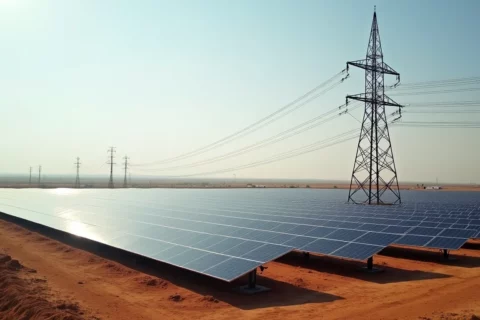
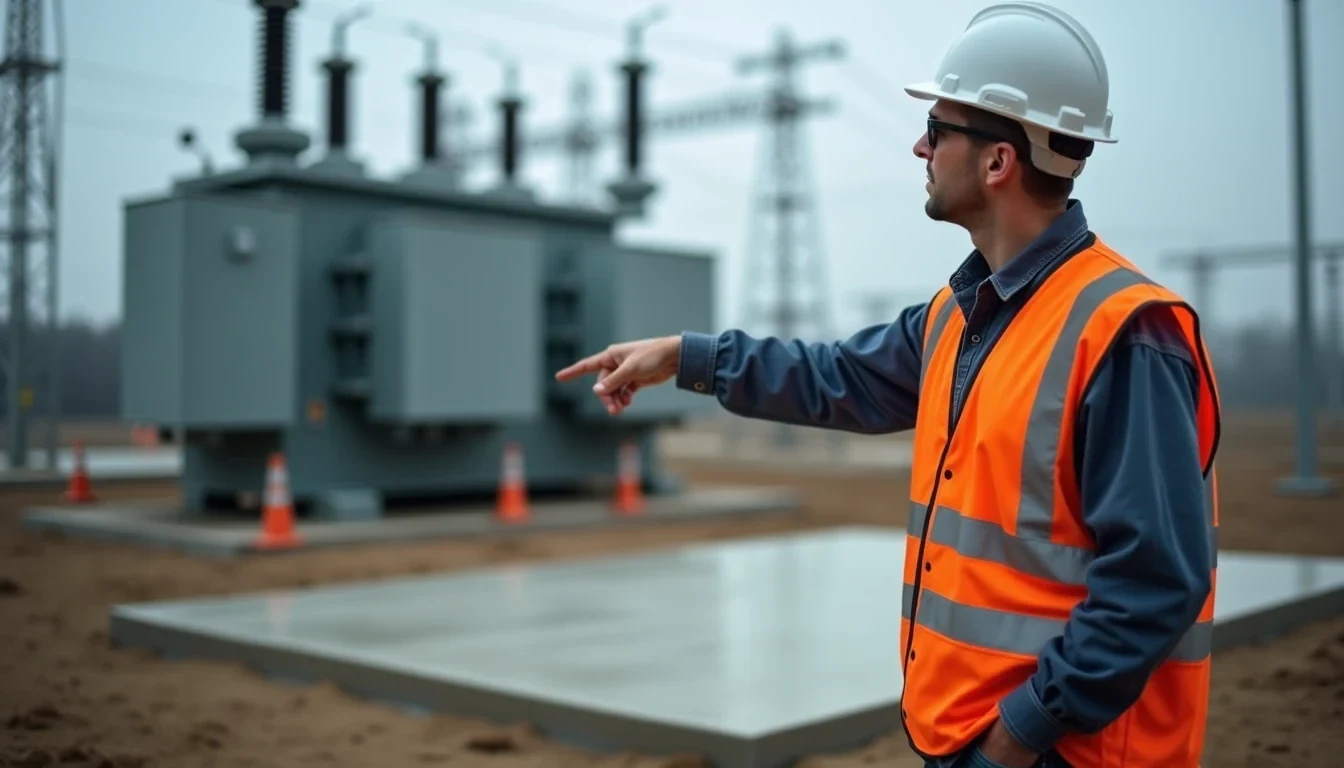
A project can have every permit signed, every dollar committed, every hectare of land secured, and still sit idle for three years because no one can build the box that changes one voltage into another. The energy transition lives here, not in laboratories chasing breakthrough chemistries or in desert solar fields breaking generation records, but in the queue for a technology Nikola Tesla would recognize on sight.
The 160-Week Wait
The current lead time for large power transformers in the United States is 160 weeks. This is not an anomaly; it is the new baseline. Utilities and developers who once scoped equipment needs 12 to 18 months ahead now place orders three to four years before they expect to flip a switch. Some pay deposits years in advance simply to reserve factory slots that may not exist.
Infrastructure markets are not supposed to function this way. Capital committed that far ahead bleeds carrying costs. Project schedules lose their mooring to anything a developer controls. The entire apparatus of energy transition planning, from interconnection queues to power purchase agreements, starts to wobble when its most predictable component, the physical machine that makes electricity grid-compatible, becomes its least predictable.
The demand surge is real and multi-headed. Data centers are the newest and hungriest customer. Amazon Web Services pledged $35 billion to Virginia data center expansion through 2040, and every megawatt of that compute load needs transformers at multiple stages. Renewables add their own parallel demand: a wind or solar farm requires step-up equipment where generation meets transmission, plus the substation upgrades to push that power toward load centers. The US Department of Energy estimates over 70% of American transmission lines and transformers have passed their 25th birthday. The Bipartisan Infrastructure Law of 2021 poured billions into grid refurbishment, which sounds like a solution until you realize it joins the same queue for the same machines as everyone else.
Why Factories Cannot Just Build Faster
The transformer itself is a strange industrial object. It is not a semiconductor where billion-dollar fabs achieve nanometer precision through standardized processes repeatable by the thousand. It is a bespoke electromechanical machine, engineered to exact voltage, impedance, cooling, and environmental specifications for its particular grid location. Each large unit is essentially a one-off.
This customization ripples backward through the supply chain. Grain-oriented electrical steel, the specialized alloy at the core of every efficient transformer, is produced by a handful of mills worldwide, concentrated heavily in Japan and South Korea. Copper of sufficient purity, insulation systems rated for decades of thermal stress, and the skilled technicians who can wind coils and assemble cores without introducing fatal flaws, all move on their own constrained timelines. A transformer factory is not a building you convert from warehouse status in six months. It needs vacuum drying ovens large enough to house a bus, winding machinery rated for tonnes of conductor, and testing bays that can simulate lightning strikes and short-circuit forces. Siemens Energy is spending $150 million to double capacity at its Charlotte, North Carolina plant by 2025. Hitachi Energy put $37 million into its Virginia facility in 2023. These are serious investments with long gestations, arriving decades after the industry consolidated and stopped building redundant capacity.
The labor problem compounds the capital problem. The workforce that designs, winds, welds, and tests large power transformers cannot be trained in a boot camp. The average age of hands-on expertise in this trade skews high, and the pipeline behind it has run thin for a generation because the work looked stable rather than growing.
The Strategic Geometry of Scarcity
This constraint creates a market shape that should worry anyone who believes energy transition proceeds on technology merit alone. We have entered a seller’s market for an essential commodity, and the sellers are few. Manufacturers dictate terms: earlier payments, longer commitments, less flexibility on specifications. Buyers with weaker balance sheets or less foresight find themselves shut out not by technology failure but by calendar arithmetic.
The queue effects cascade. Lawrence Berkeley National Laboratory tracked over 2,000 gigawatts of generation and storage capacity waiting in US interconnection queues in 2023. Not all of that backlog traces to transformer scarcity, but enough does to matter. A solar project that could deliver clean electrons in 2026 instead idles into 2028 or 2029, pushing against state renewable mandates, corporate sustainability commitments, and the arithmetic of climate targets. The US aim of 100% clean electricity by 2035, already aggressive, starts to look fantastical when its physical substrate cannot be fabricated in time.
Geopolitically, the concentration of transformer manufacturing and critical raw materials in a narrow band of countries introduces leverage points that have nothing to do with energy policy and everything to do with industrial statecraft. A nation that controls grain-oriented electrical steel capacity, or the large transformer factories that consume it, holds a veto over grid modernization in any country that does not. The Inflation Reduction Act’s domestic manufacturing tax credits and the Department of Energy’s “Building a Better Grid” initiative of 2021 recognize this vulnerability, but industrial policy moves slowly and the demand clock is ticking loudly.
What Innovation Actually Means Here
Energy commentary often reaches for the shiny fix: solid-state transformers, advanced materials, modular designs that might bypass the bespoke bottleneck. Some of this research is genuine and worth watching. But the immediate relief, the difference between projects that happen and projects that stall, lies in something far more prosaic: more transformer factories, running at higher output, with more skilled workers feeding them.
This is the oddity of this moment in the energy transition. The breakthrough technology that unlocks the next phase may not be a technology at all, in the sense that word is usually meant. It may simply be industrial capacity for a device invented before the First World War, scaled to meet demand its inventors could not have imagined. The strategic game here is not about who discovers the next thing. It is about who builds enough of the old thing, fast enough, to keep the new thing from choking on its own growth.