The first viable market for multi-day batteries has arrived, and it is not the one anyone predicted. For years, grid operators treated long-duration storage as a technology perpetually five years away from making economic sense. Engineering was not the problem; customers were. Utilities buy electricity on marginal cost, which does not accommodate a battery that costs several times more per megawatt-hour than lithium-ion and sits idle for weeks waiting for a multi-day lull in wind. Then the AI build-out accelerated, and a new class of buyer entered with a radically different calculation. For a hyperscaler training a large language model or running real-time inference for financial trading algorithms, an outage is an existential hit to the business model, not an inconvenience.
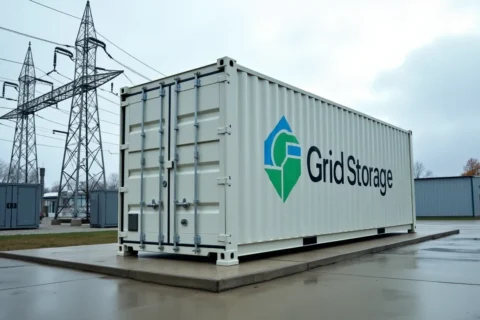
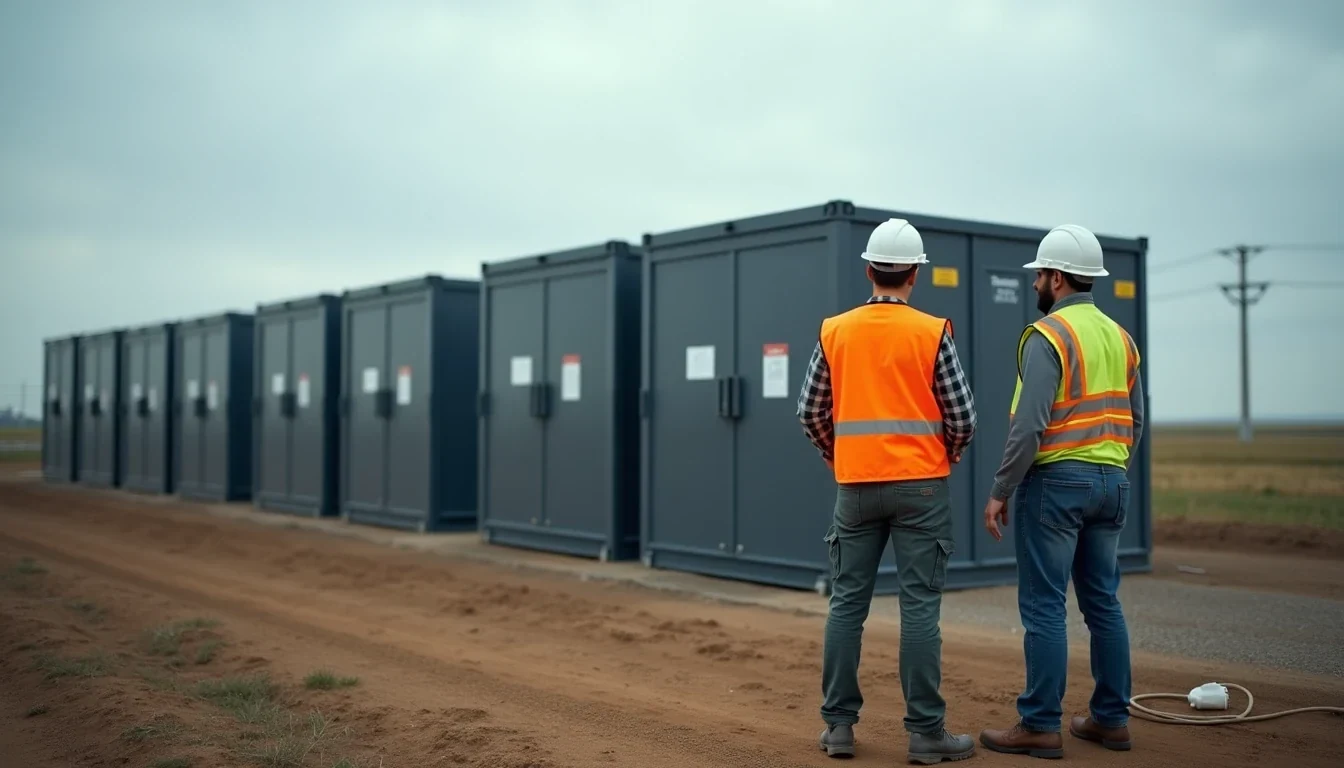
Google’s partnership with Xcel Energy in Minnesota, announced in 2023, makes the logic concrete. The two companies are planning a 300-megawatt system with 30 gigawatt-hours of storage, enough to power a data center for multiple days. This is not a pilot project. It is one of the largest multi-day storage projects announced anywhere because Google values uninterrupted power enough to pay a premium no utility would justify through ordinary market revenue. The search giant is effectively acting as anchor tenant for a technology that otherwise lacked a customer base large enough to reach manufacturing scale.
Why AI companies calculate risk differently
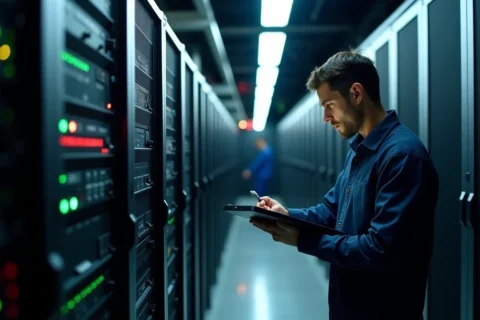
The average data center outage cost $740,357 in 2022, according to Uptime Institute, and AI-specific operations can exceed that figure by wide margins. Training runs for models like Google’s Gemini Ultra consume gigawatt-hours over weeks or months. A power interruption corrupts data in volatile memory, forces expensive restarts, and can render weeks of computation worthless. Real-time services face immediate revenue loss and customer churn.
This creates a willingness to pay that utilities simply do not possess. A grid operator balances cost and reliability across millions of customers. An AI company faces concentrated, asymmetric risk at single facilities. The IEA projected in 2024 that global data center consumption could exceed 1,000 TWh by 2026, up from roughly 460 TWh in 2022, with AI as the primary driver. At that scale, even a brief outage at a major training cluster represents a loss measured in eight or nine figures. Multi-day batteries look expensive until you price them against the alternative.
The technology still has problems
Long-duration energy storage remains early and costly. Technologies capable of storing electricity for ten hours to multiple days, whether flow batteries, compressed air, thermal systems, or gravity-based approaches, have not achieved the manufacturing scale or supply chain maturity of lithium-ion. BloombergNEF noted in 2023 that capital costs per megawatt-hour can run several times higher than short-duration alternatives. Most deployed grid storage is still four-hour lithium-ion, with multi-day systems representing a thin slice of pilot projects.
The financing challenge is circular. Without manufacturing scale, costs stay high. Without costs coming down, utilities cannot justify deployment. Without deployment, operational data remains scarce, leaving technology risk unpriced and investors wary. The International Renewable Energy Agency confirmed in 2023 that long-duration storage constituted a small fraction of operational capacity globally. The sector needed a customer willing to absorb early-stage pricing in exchange for reliability guarantees the conventional grid could not offer.
How AI demand breaks the cycle
Google’s Minnesota commitment provides exactly the anchor demand that changes the economics. Long-term contracts from creditworthy hyperscalers de-risk factory investments, enable manufacturing scale, and generate the operational data needed to refine designs and reduce maintenance costs over time. The pattern is familiar. Solar photovoltaic modules and lithium-ion batteries both followed steep learning curves driven by guaranteed early demand, whether from German feed-in tariffs or electric vehicle mandates. Multi-day storage now has its equivalent pull factor.
The mechanism extends beyond any single project. Secured demand allows manufacturers to build larger facilities, invest in automation, and optimize production processes. Higher margins from premium contracts fund further research and development. Early deployments surface performance issues in real conditions rather than laboratory simulations. Supply chains for specialized materials and components mature as volumes grow. Each step reduces the cost and risk for subsequent buyers, including utilities that currently cannot justify the technology on standalone economics.
Who gains and what changes
The strategic implications run in several directions simultaneously. For long-duration storage developers such as Form Energy, ESS Inc., and Energy Vault, AI demand creates a commercial pathway where none existed. For utilities, partnerships with hyperscalers may evolve from novelty to core business model, with resilience and 24/7 carbon-free power replacing lowest-cost generation as the primary procurement criterion for certain customer segments. For the grid as a whole, widespread multi-day storage enables renewable penetration levels that short-duration batteries cannot support, making 80 percent or higher clean electricity systems technically feasible without fossil backup.
The hyperscalers themselves are becoming energy infrastructure players in ways that blur sector boundaries. Google, Microsoft, and Amazon Web Services are not merely purchasing power. They are shaping technology adoption timelines, influencing grid planning, and potentially redirecting policy priorities through the scale of their commitments. This is a hard-headed competitive necessity. The companies building the largest AI training clusters need power that is both carbon-free and absolutely reliable. Existing grid infrastructure delivers neither consistently.
The open question
Whether this dynamic ultimately serves broader decarbonization or merely creates a parallel power system for tech giants remains unresolved. The Minnesota project could demonstrate that multi-day storage works at scale, driving costs down for everyone. Or it could partition the grid into tiers, with premium reliability available to those who can pay while ordinary customers remain dependent on conventional infrastructure. The technology is no longer the binding constraint. The politics of who gets access, and on what terms, is the game now.