General Motors, CATL, BYD, and a growing list of storage developers are pouring money into sodium-ion battery plants. This chemistry stores roughly 30% less energy by weight than the lithium iron phosphate cells now standard for grid projects. That gap is fatal in a vehicle. In a shipping container parked beside a substation, it is irrelevant. The International Energy Agency’s 2023 Energy Storage Outlook projected sodium-ion will capture about 10% of global storage additions by 2030. This number sounds modest, but it represents a deliberate refusal to play lithium’s game.
Why Weight Stopped Mattering
Lithium-ion conquered batteries by solving three problems at once. A single chemistry powered phones, cars, and grid installations. This meant the same factories, supply chains, and learning curves. Energy density was the universal advantage. Every kilogram saved in a smartphone left room for a larger screen. Every kilogram saved in an electric vehicle added range. Every kilogram saved in a grid battery changed almost nothing.
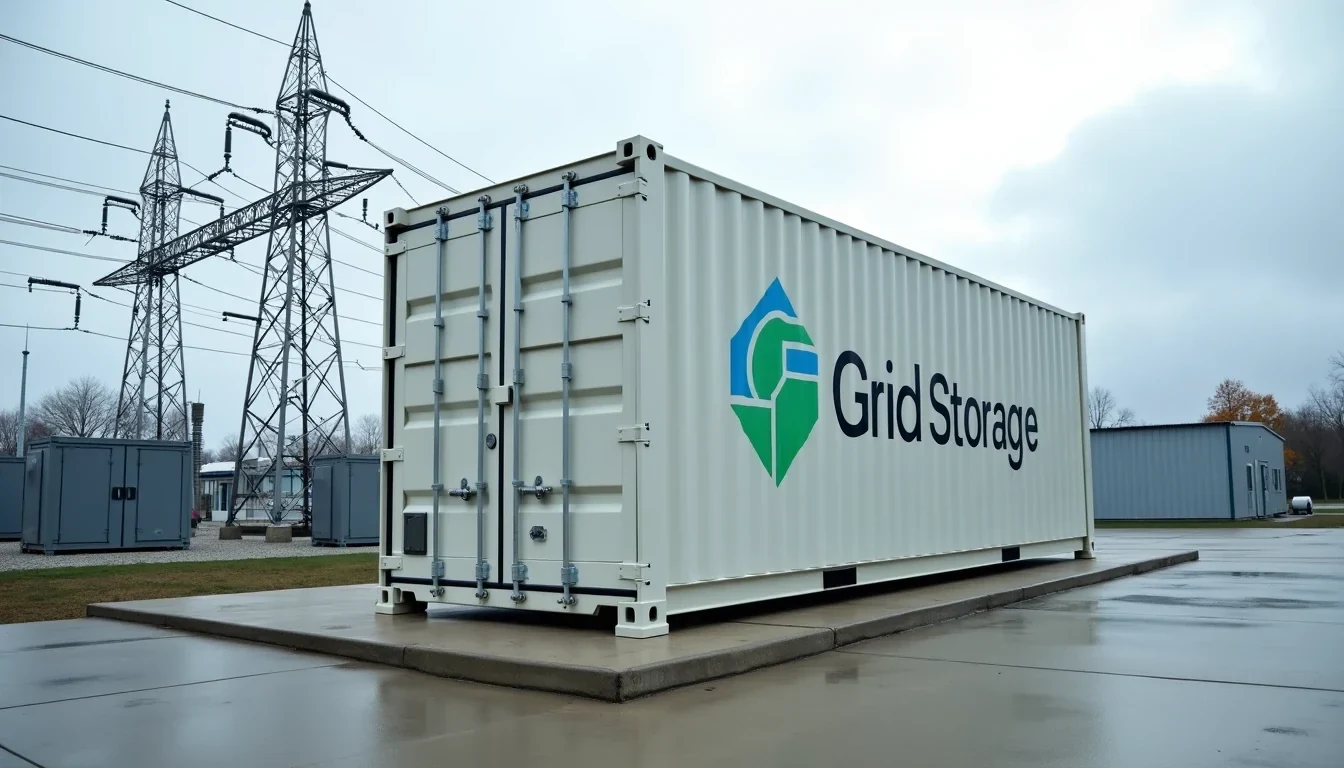
Stationary storage sits on concrete pads. It travels once by truck, then stays for fifteen years. The relevant metrics are cost per kilowatt-hour, cycle life, safety profile, and how much climate control the container needs. Sodium-ion loses on density but competes aggressively on all four. BloombergNEF estimated in 2023 that sodium-ion cells could run 20-40% cheaper than lithium iron phosphate. The raw material is literally salt. It contains no cobalt or nickel. Supply is not concentrated in a handful of South American salt flats or Australian hard-rock mines.
The temperature performance is more important than most discussions acknowledge. Some sodium-ion formulations discharge effectively at -20°C and operate without degradation at 60°C. Lithium-ion in the same conditions demands heating, cooling, or a shortened life. For a grid operator in northern China or a data center in India, this difference directly converts into capital saved on HVAC and avoided operational risk.
Who Is Betting and What They Want
CATL, the world’s largest battery manufacturer, unveiled its first sodium-ion cell in 2021 and has since pushed toward industrial scale. Its partnership with Chery to integrate sodium-ion into vehicles grabbed headlines, but the strategic logic runs deeper. CATL wants a portfolio that does not depend on lithium price cycles or geopolitical friction around critical mineral supply chains. BYD followed a similar path, reportedly planning sodium-ion versions of its Seagull entry-level EV while building capability for stationary applications.
General Motors has explored sodium-ion through patent filings and partnership discussions, though its Ultium platform remains firmly lithium-based. The American automaker’s interest is defensive as much as offensive: it wants to understand a chemistry that could produce cheaper storage solutions or, in a supply crisis, alternative vehicle batteries. Northvolt, the Swedish manufacturer, announced sodium-ion development in 2023 with an explicit focus on grid-scale storage, calling the chemistry safer and more sustainable than existing options. Reliance Industries acquired Faradion, a UK sodium-ion specialist, for £100 million in 2021, aiming at India’s explosive renewable energy growth and the chance to build a battery industry without importing lithium processing know-how.
HiNa Battery, a Chinese startup less known outside industry circles, installed the world’s first sodium-ion electric vehicle in 2023 and established production lines. Its motivation is speed: commercializing before larger competitors lock in standards. The diversity of these actors is notable. This is not one national champion pushing an alternative. It is a scattered coalition of companies with different home markets, constraints, and timelines, converging on the same strategic judgment.
The Segmentation That Lithium Built
Sodium-ion’s opportunity exists because lithium-ion’s success created a rigid market structure. The chemistry that won mobile electronics and then passenger cars became the default for everything else. Factory capacity, engineering talent, and supply chains all optimized around lithium. This optimization carried a cost: lithium-ion’s advantages in portable applications became treated as necessary for stationary ones, even where they added expense without function.
The emerging segmentation is cleaner than most technology transitions. Lithium-ion keeps vehicles, consumer electronics, and any application where mass or volume constraints dominate. Sodium-ion takes grid support, data center backup, industrial peak shaving, and rural microgrids where different performance metrics apply. Neither chemistry needs to defeat the other. The IEA’s 10% projection by 2030 describes a parallel expansion, not a replacement.
This segmentation has political implications that receive too little attention. Lithium concentration in Chile, Argentina, Australia, and a processing chokepoint in China has become a source of strategic anxiety for policymakers in Europe, North America, and India. Sodium offers a credible diversification path. This does not mean complete independence, as the element is too common for that to be meaningful, but it does reduce exposure to specific supply disruptions and price spikes.
What Ten Percent Actually Means
Ten percent of global storage additions by 2030 translates to tens of gigawatts of annual capacity. More importantly, it represents proof of commercial viability at scale. A technology that reaches that threshold attracts further investment, achieves steeper cost declines through manufacturing experience, and becomes embedded in utility procurement standards. The first projects are always harder than the hundredth.
The pressure on lithium-ion pricing may be the most consequential secondary effect. Lithium iron phosphate, already the cheaper lithium chemistry, faces a competitor with comparable cycle life and superior safety at lower projected cost. This competition disciplines margins across the industry and accelerates the overall deployment of storage by making more projects economically viable. The renewable energy transition needs storage to manage intermittency, and cheaper storage means faster decarbonization.
Some risks remain underexplored. Sodium-ion’s early cycle life claims, now targeting 5,000 to 10,000 cycles, need validation in field conditions over years, not months. The manufacturing learning curve is steep; projected cost advantages assume scale that does not yet exist. The chemistry still lacks the dense ecosystem of component suppliers, recycling infrastructure, and trained engineers that surrounds lithium-ion.
The Open Question
The strategic logic is sound. The investments are real. The IEA’s forecast is plausible. What remains uncertain is whether sodium-ion stays confined to stationary applications or eventually challenges in vehicles where its weight disadvantage matters less than its cost advantage. BYD and CATL are already testing that boundary with entry-level electric cars. If sodium-ion works in a Seagull, it could work in a European city car. If it works in a city car, the segmentation logic weakens.
For now, though, the game is being played on two boards. Lithium owns mobility. Sodium is building its position on the grid. The bet across multiple companies and continents is that stationary storage is large enough, fast-growing enough, and differently demanding enough to support a major battery chemistry on its own terms. The weight advantage that made lithium dominant becomes, in this reading, a kind of strategic trap: a strength so universally applicable that it obscured opportunities where it was not actually needed.