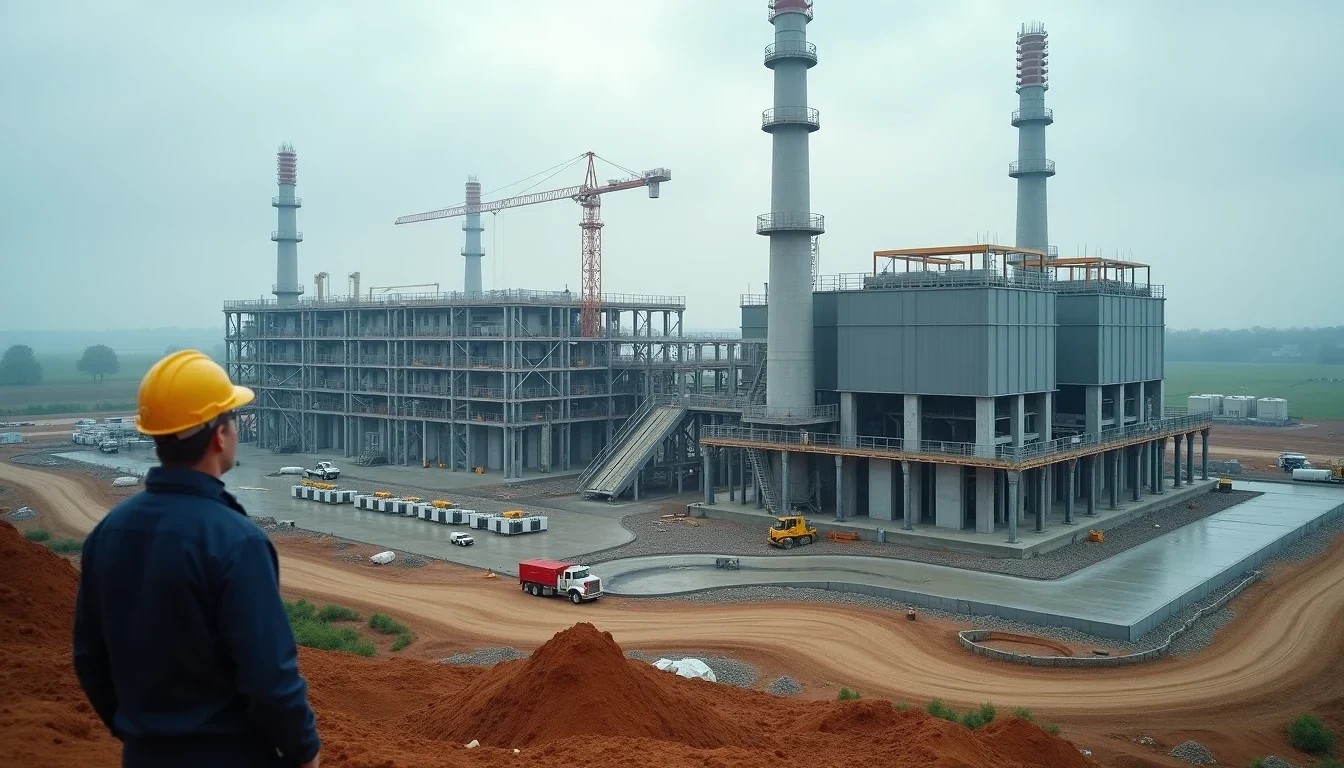
2.6 gigawatts of batteries is not a typo. That is the storage complement planned for a single computing campus in Kentucky, where NextEra and Brookfield intend to pair it with up to 2 gigawatts of gas generation. The scale is worth sitting with for a moment. Two years ago, a battery installation one-tenth that size would have dominated energy headlines for a week. Now it is a supporting detail in a larger story: the technology companies that consume the most electricity are no longer willing to wait for the grid to catch up.
What is happening in Kentucky, and more visibly in Texas, is the return of the private industrial power station. This is not heritage architecture from the textile mills of the 1920s, but a deliberate strategic choice by firms whose power demand has outrun every conventional planning horizon. These companies are becoming developers, financiers, and operators of their own generation assets. The utility is no longer their sole partner. Sometimes it is not a partner at all.
Why the Grid Lost the Race
The arithmetic is brutal. The International Energy Agency projected in January 2024 that global data center electricity consumption would double from 2022 levels to exceed 1,000 terawatt-hours by 2026. That is Japan’s entire national demand, added to the ledger in four years. No grid operator anywhere was staffed or capitalised for that velocity.
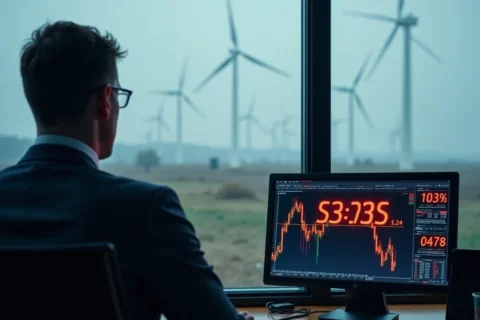
Texas illustrates the squeeze most clearly. ERCOT, the state’s grid operator, still carries the memory of Winter Storm Uri in February 2021, when generation failures left millions without power and hundreds dead. Data center operators watched that collapse and drew their own conclusions about relying on a shared system they do not control. Behind-the-meter generation, built on their own land to their own timeline, offers certainty of delivery matched to certainty of need, which the public grid cannot.
Speed is the other factor. Utility-scale generation and transmission projects move through interconnection queues that now stretch to half a decade or more in some US markets. A data center campus planned for 2026 cannot wait for 2031. Private projects bypass that queue entirely. Microsoft secured state environmental approval in 2023 for a 120-megawatt gas plant at its Boydton, Virginia campus because the alternative was waiting for a grid expansion that might arrive after the servers were already obsolete.
The Technology Mix and What It Reveals
The fuel choices are not ideological. They are operational. Natural gas dominates because it is dispatchable: it runs when the sun does not shine and the batteries are depleted. The Kentucky project makes this explicit. Two gigawatts of gas is not a transition story in the greenest sense. It is a reliability story dressed in transition language.
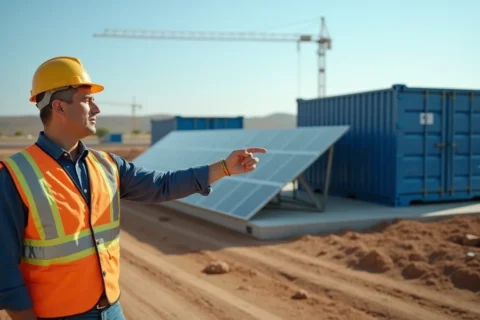
The battery component distinguishes this generation of private power from the industrial self-supply of the past. 2.6 gigawatts of storage is not backup. It signals that these operators intend to cycle daily, arbitraging renewable output, smoothing demand, and potentially selling services back to the grid when profitable. Google has already operated a 30-megawatt, 120-megawatt-hour system at its Belgian data center since 2023. Meta has contracted for over a gigawatt of solar and wind through power purchase agreements, though it often seeks arrangements that feel more behind-the-meter than traditional utility contracting.
The nuclear interest is harder to dismiss as symbolism. Microsoft’s 2023 hiring of nuclear energy experts to evaluate small modular reactors suggests a longer horizon than gas permits. SMRs do not solve the 2026 problem. They might solve the 2036 problem, if regulatory and construction timelines compress. The bet is being placed anyway.
What Utilities Are Losing
Traditional utilities face a structural challenge they have not confronted since the original unbundling of generation from transmission in competitive markets. Their largest growth customers are becoming competitors. BloombergNEF noted in 2023 that this erosion of industrial load threatens the regulated rate base that underpins utility finance. A utility that planned its transmission expansion around serving a 500-megawatt data center campus now finds that campus self-supplying, while still demanding grid connection for backup and emergencies.
That residual connection is where the accounting gets contentious. The data center wants the grid as insurance. The utility still must maintain the wires and transformers to provide it. If the industrial customer is not buying energy at the volumes once projected, the fixed costs of that infrastructure do not disappear. They redistribute. The Edison Electric Institute flagged this dynamic in 2023: stranded transmission and distribution costs are recovered from a shrinking pool of remaining ratepayers. Ordinary consumers, in other words, may subsidise the private energy ecosystem of the world’s most valuable companies.
Grid operators face operational opacity as well. ERCOT can see the transmission-level flows. Behind-the-meter generation is, by definition, behind the meter. A large gas plant or battery array that starts or stops without visibility complicates load forecasting and frequency management. The grid becomes less predictable at the precise moment it needs to become more resilient.
The Uncomfortable Questions
The acceleration of private deployment is real. The IEA’s 2024 analysis of corporate energy strategies acknowledged that private investment can bring capacity online faster than utility planning cycles. This is a genuine benefit in a capacity-constrained world. But the fuel mix matters, and the coordination matters more.
A 2-gigawatt gas plant in Kentucky has a forty-year economic life. It will still be running in 2065 if the economics hold. That is not a bridge fuel. That is infrastructure lock-in, built by companies whose public commitments to decarbonisation are among the most aggressive in corporate history. The contradiction is not hypocrisy exactly. It is the gap between what sounds good in a sustainability report and what keeps servers running through a Kentucky winter.
The broader energy transition suffers if development fragments into uncoordinated private enclaves. The National Renewable Energy Laboratory warned of this in 2022: decentralisation without coordination risks inefficient resource allocation, stranded public assets, and a grid that is less than the sum of its private parts. A data center islanded with its own generation is secure for its operator. Whether it strengthens or weakens the system around it depends on rules that most US states have not yet written.
Who Pays, Who Decides
The direct capital costs are borne by the technology firms and their energy partners. That is straightforward. The indirect costs are where the political economy turns. Federal tax credits under the Inflation Reduction Act of 2022 flow to renewable and advanced technology components of these projects. Public money accelerates private infrastructure that may reduce public grid utilisation. The remaining grid customers, residential and small commercial, inherit the fixed costs.
State utility commissions are now scrambling to update interconnection standards, grid service fees, and cost recovery mechanisms for a world where the largest loads are only partial customers. Some utilities are exploring “power-as-a-service” models, effectively conceding that their future role may be facilitator rather than sole provider. That is a diminished position, and it carries diminished political clout.
The deeper question is about governance. Electricity systems have always balanced public obligation against private return. The regulated utility was the compromise: guaranteed returns in exchange for universal service and regulatory oversight. When the largest consumers exit that bargain, what remains? A grid for those who cannot afford to leave it, maintained by those who must pay for infrastructure they no longer fully use.
The technology companies are not villains in this story. They are rational actors responding to real constraints. But their rationality produces a system that looks less like shared infrastructure and more like private fiefdoms with public backup. The Kentucky numbers alone, 2 gigawatts of gas and 2.6 of batteries, tell us that the scale of departure is no longer marginal. It is structural. The board is being reset, and one class of player is writing its own rules.