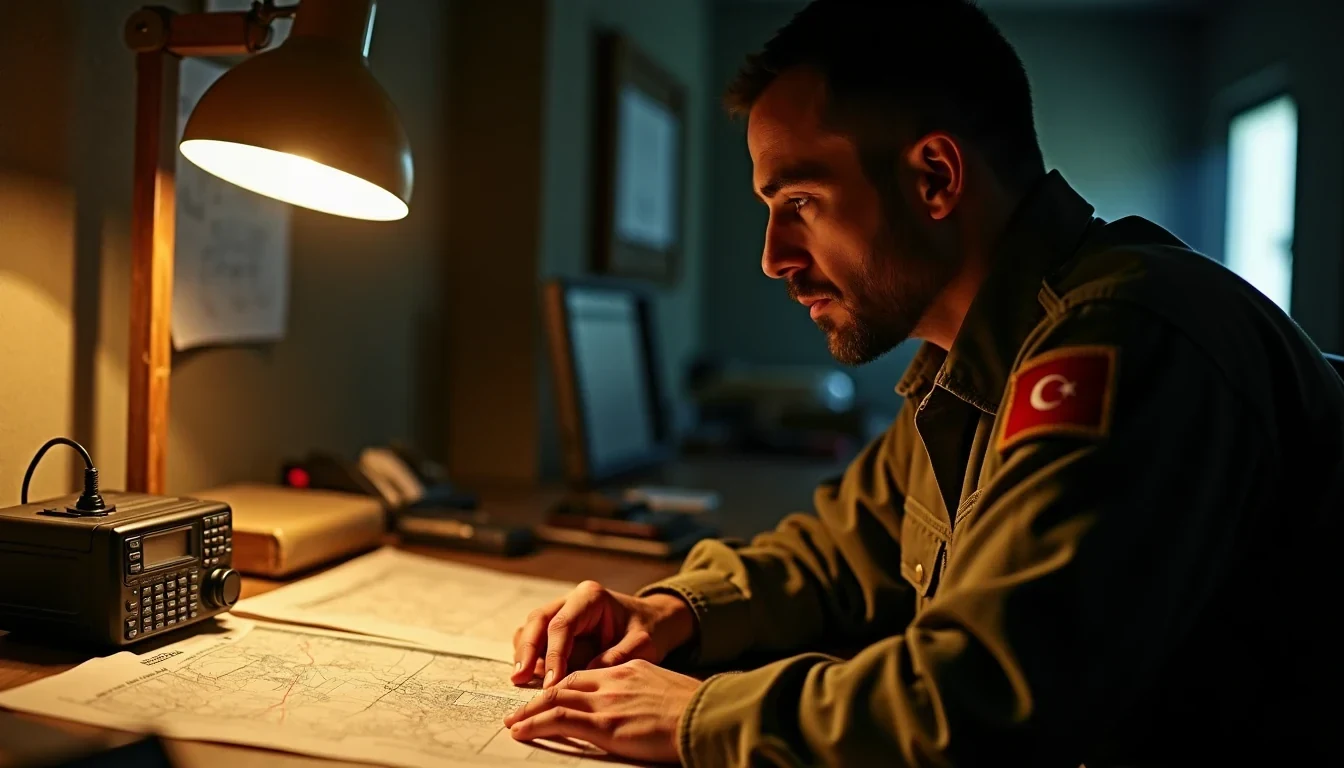
A strike in Syria and a NATO shrug make a cleaner argument than any speech from Brussels. If the reports about Turkish assets being hit are right, the bigger story is that Türkiye reached for alliance backing and found the room already empty.
People keep trying to soften that with procedure and diplomatic fog. I do not buy it. NATO did not line up behind Türkiye against Israel, leaving Ankara with a simple choice: swallow the insult, or answer on its own. In the Middle East, that kind of choice rarely stays tidy for long.
What happened
The reported incident sits awkwardly between battlefield reality and public proof. Major outlets and official statements have not produced a clean, widely confirmed account of a direct Israeli strike on Turkish military assets in Syria, followed by a formal Turkish public response against Israel. But politics do not wait for courtroom standards.
Türkiye already has troops in northern Syria, where it has operated since 2016 through campaigns such as Euphrates Shield, Olive Branch, Peace Spring and Spring Shield. Israel, for its part, has carried out hundreds of strikes in Syria over the past decade, usually against Iranian-linked forces and Syrian military sites, not against Turkish-controlled positions. When a Turkish asset is reportedly hit, the event lands in a space where two separate security projects overlap, and that overlap breeds trouble.
NATO’s refusal says something blunt. Türkiye wanted the alliance to treat this like a collective problem. Instead, NATO acted like a club that becomes very careful once the argument leaves its own dining room.
Why NATO stepped back
NATO is built for a narrow purpose. Article 5, the alliance’s collective defence clause, was invoked once, after the 11 September 2001 attacks on the United States. The response then was concrete, with AWACS aircraft over American skies and naval work in the Mediterranean. That is the model: a member is attacked on its own soil, and the alliance closes ranks.
Syria does not fit that model neatly. Turkish forces there are present by Ankara’s choice, not as part of a NATO mission. Those deployments have often been coordinated around Russian or American channels in specific zones, but they remain unilateral Turkish operations. NATO has no habit of turning such deployments into alliance wars, especially when the other side is Israel, which is not a member at all and sits in NATO’s Mediterranean Dialogue as a partner, not an ally under the treaty.
NATO has run missions outside Article 5, in Afghanistan under ISAF, in Libya under Operation Unified Protector in 2011, and in Kosovo with KFOR. Those were not cases of a member dragging the alliance into a border fight it chose for itself. NATO also tends to stay neutral in quarrels between members, which is why the long Turkish-Greek mess over Cyprus and the Aegean has never turned the alliance into a referee with a spine. This is by design.
What Türkiye can still do
If NATO will not back Türkiye, Ankara still has tools, and none of them are gentle. It can widen military operations in northern Syria, push harder around places like Manbij or Tel Rifaat, and try to stitch together a broader security strip along its border, the sort of thing President Erdoğan was talking about in 2022. It can also deepen support for the Syrian National Army, the proxy umbrella it backs, and use that to squeeze Kurdish forces, the Syrian regime, or both.
That path offers real gains. It could improve border security, increase Turkish leverage in any future Syrian deal, and let Erdoğan look decisive rather than cornered. It also comes with the usual price tag of unilateral regional power politics. Direct clashes with Syrian regime forces, Russian airpower, or Iranian-backed militias are all on the table. So are sanctions, diplomatic blowback and more displacement in a country that has already had enough of it.
Türkiye can also try to manage the problem through diplomacy, by leaning harder on Moscow or Tehran in some Syrian channels and pulling away in others. That is the sort of flexibility middle powers like to praise in press releases. On the ground, it usually means buying time while preparing for the next round.
What this changes
The regional balance shifts the moment Ankara concludes that nobody else will absorb the risk for it. Israel wants to keep Iran from digging in deeper in Syria and from moving weapons to Hezbollah. A Turkish move could complicate that, or it could, awkwardly, cut against Iranian interests if Ankara targets the same networks. But if Türkiye destabilises zones Israel relies on for intelligence or buffer space, the overlap turns from useful to corrosive very quickly.
Syria’s Assad government is the weakest actor in the room and everyone knows it. Another Turkish push would further expose that weakness and probably force Damascus to lean even harder on Russia and Iran. Tehran would read a stronger Turkish role as a challenge to its strategic depth in Syria, the land corridor it treats as part of its regional muscle. Moscow would then be pushed into what it likes least: choosing between two clients while protecting Tartus and Hmeimim.
This is about one reported strike. It is also about a bigger test: whether Türkiye takes the message from NATO as a ceiling on its options, or as a sign that it has to redraw the board itself. The question now is not whether the alliance is willing to help. It is whether Ankara decides it no longer needs to ask.