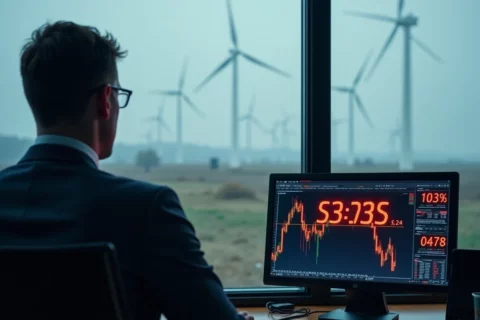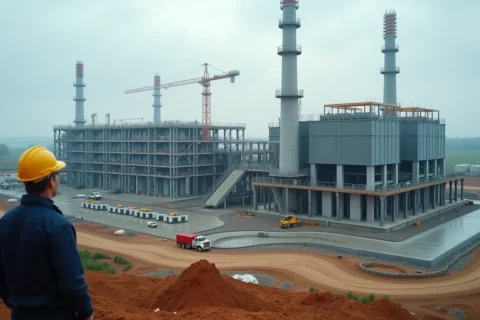
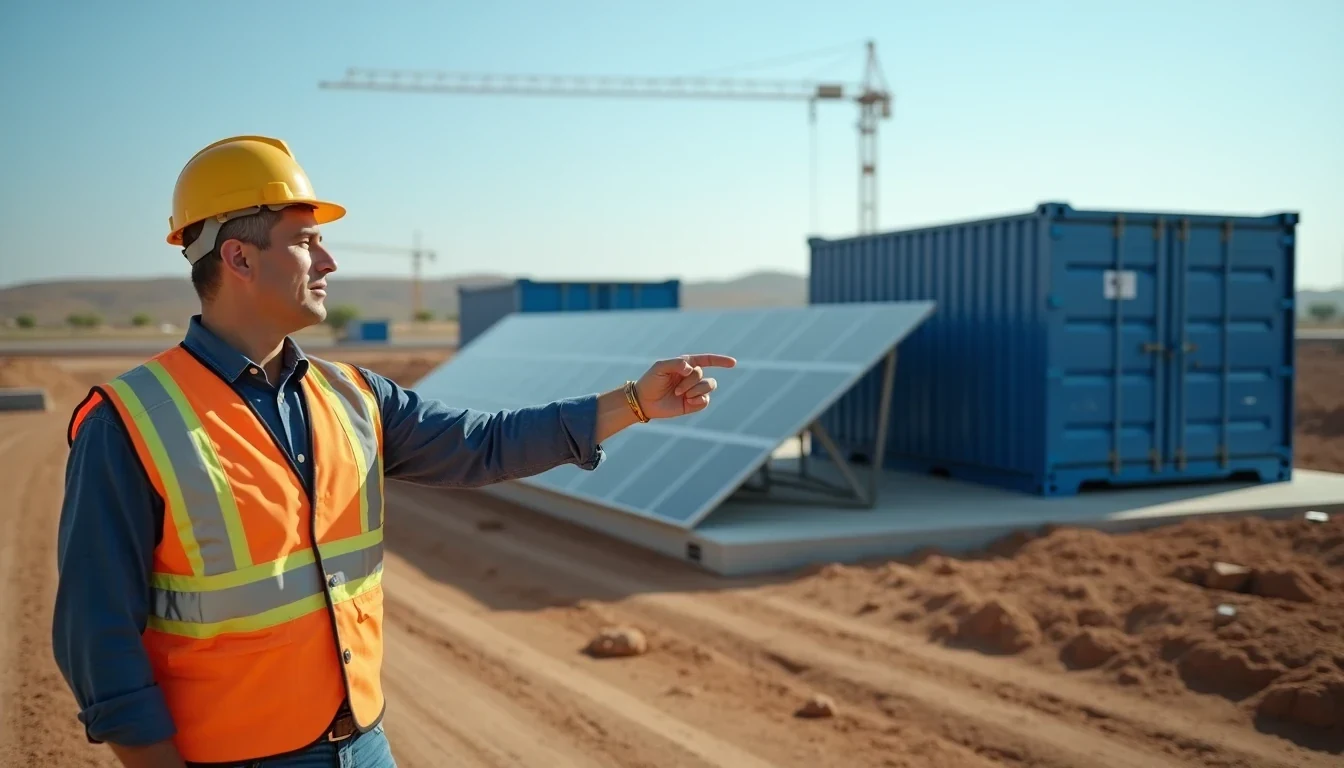
A data center developer in Virginia or Ohio now faces a choice that would have seemed irrational five years ago. They can wait roughly five years for a gas turbine that will deliver reliable, around-the-clock power, or they can have solar panels and batteries running in eighteen to twenty months. The gas option wins every engineering textbook comparison on firmness, but it is losing the actual contract because the servers it would power will be obsolete before the turbine arrives.
The Five-Year Problem
Reuters reported in 2023 that average delivery waits for new gas turbines have stretched to about five years. This is not a pandemic blip. The global supply chain for high-temperature alloys, precision castings, and advanced control systems has constricted as manufacturers like GE, Siemens Energy, and Mitsubishi Power have scaled back capacity. Decades of declining new orders for gas plants, documented by the International Energy Agency, left the industry unprepared for any demand surge. When data center construction exploded in the United States, the turbine makers had no surge capacity to deploy.
The bottleneck runs deeper than factory floors. Installation adds another eighteen to thirty-six months after delivery: civil works for foundations, cooling towers, fuel pipelines, grid interconnection. A project breaking ground in 2025 with a gas turbine might not generate a single kilowatt-hour until 2031. For a computing facility whose hardware refresh cycle runs three to five years, that timeline is commercially disqualifying.
What Eighteen Months Buys
Solar-plus-storage projects are deploying in roughly eighteen to twenty months from financial close to commercial operation. The modularity helps. Solar panels and battery containers ship as standardized units, install in parallel, and require minimal bespoke engineering. Companies like NextEra Energy Resources and Vistra Corp have refined this into a repeatable industrial process.
The power profile is different. Solar-plus-storage does not match gas on continuous output. Batteries discharge for four to eight hours depending on configuration, not the infinite runtime of a fueled turbine. But the comparison has shifted. Executives are no longer asking which technology scores highest on a theoretical reliability index. They are asking what can be operating before the computing equipment becomes obsolete. On that metric, the contest is not close.
Beyond the Server Farm
This logic is spreading. Electric vehicle gigafactories announced by Tesla, Ford, and GM in 2023 face aggressive production ramp schedules tied to government incentives. Semiconductor fabrication plants funded by the 2022 US CHIPS Act carry multi-billion dollar investments with construction timelines that cannot slip for power delivery. Remote mining operations from Australia to South America increasingly bypass diesel generator deployments, which share gas turbines’ logistical complexity, for modular solar and battery microgrids.
Even military procurement is bending toward speed. Defense forces globally are investing in rapidly deployable microgrids and mobile renewable units to reduce fuel convoy vulnerability. The United Nations and humanitarian organizations have used containerized solar and battery systems to establish power in disaster zones within weeks. The common thread is operational tempo: any organization whose success depends on moving fast now treats energy procurement as a logistics decision, not an engineering optimization.
The Regulatory Scramble
Grid operators and regulators are struggling to keep pace. The US Federal Energy Regulatory Commission issued Order 2023 to reform interconnection queues, mandating “first-ready, first-served” cluster studies to prevent renewable and storage projects from drowning in administrative delay. ERCOT in Texas and CAISO in California have developed ancillary services markets that procure fast-responding battery resources for frequency regulation. California’s energy storage mandates, initially set at 1.3 gigawatts by 2020 and expanded since, explicitly recognize that speed of deployment and grid flexibility carry strategic value independent of raw capacity.
Virtual power plants, aggregating rooftop solar, home batteries, and electric vehicles, are gaining regulatory support in Germany and Australia. The conceptual model is inversion: instead of building a large centralized plant and distributing its power, grid operators aggregate distributed assets to mimic a plant’s behavior. The architecture favors technologies that can be installed incrementally, without the five-year procurement cycles of thermal generation.
Who Loses When Speed Wins
The gas turbine manufacturers are in a structural trap. They cannot justify capacity expansion based on a demand signal they doubt will persist, yet their inability to deliver quickly is driving customers toward alternatives that make the demand signal self-fulfilling. Every project that chooses solar-plus-storage because gas is too slow becomes a demonstration case for the next procurement decision.
More broadly, the definition of energy security is fragmenting. For nations and industries with patient, predictable demand growth, firm power still commands a premium. For the growing share of the economy defined by rapid obsolescence cycles, energy security now means the ability to plug in next year, not the theoretical perfection of a plant that arrives in the next decade. These are different games being played on the same grid, and the rules are diverging.
The question that remains open is whether grid systems can maintain stability as the fast-deployed, intermittent-heavy resource mix expands. The bet being made, implicitly, by every data center developer choosing batteries over gas, is that grid operators and storage technology will solve the reliability problem before the reliability problem solves them. It is a bet on speed compounding faster than complexity accumulates. The turbine, waiting in its five-year queue, is the hedge against that bet being wrong.